Physical Address
304 North Cardinal St.
Dorchester Center, MA 02124
Physical Address
304 North Cardinal St.
Dorchester Center, MA 02124

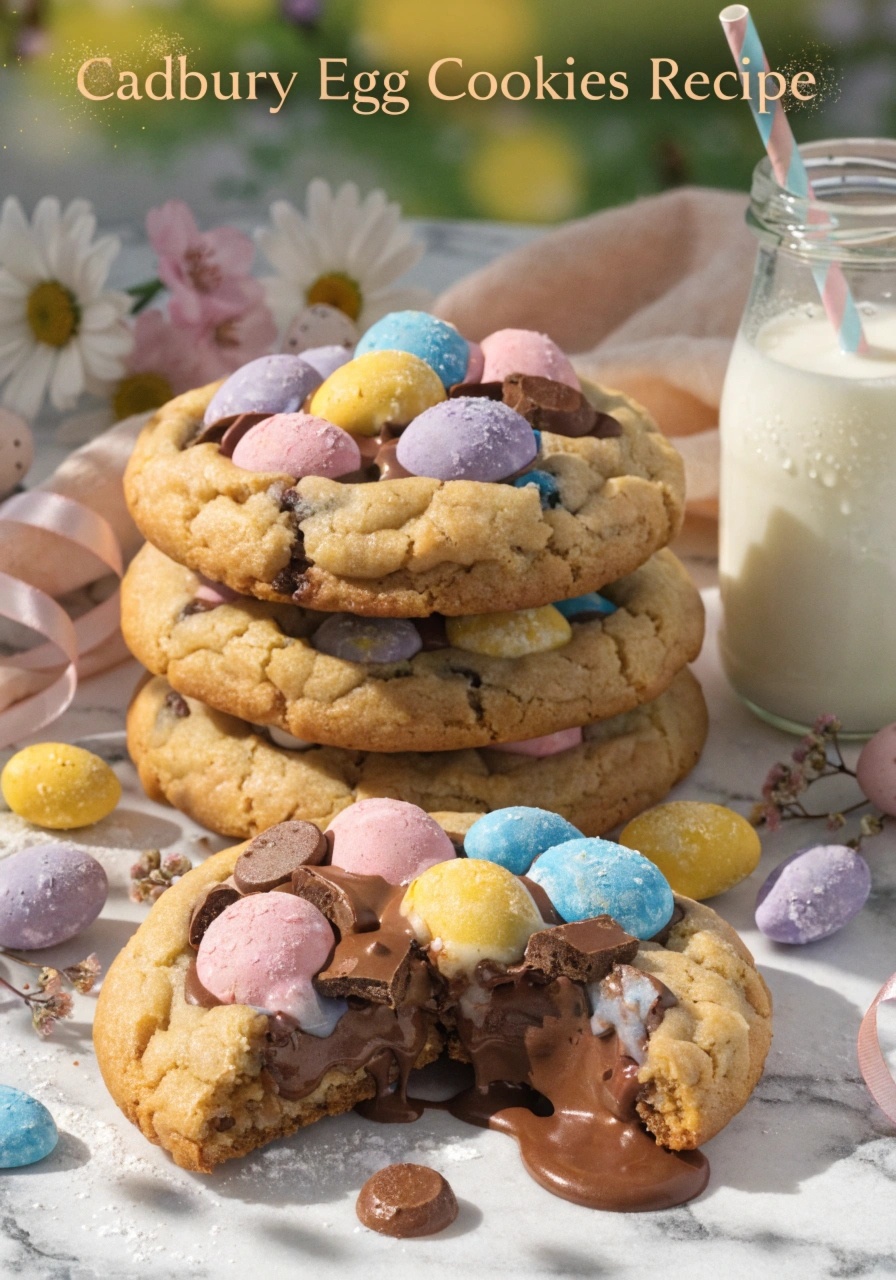
There’s something about Cadbury eggs that no other seasonal candy quite replicates. The moment those foil-wrapped eggs appear on store shelves, something genuinely shifts — Easter feels real, spring feels close, and a particular kind of sweetness settles into the air. Maybe you remember grabbing one from a basket as a kid, biting through that thin chocolate shell to find the impossibly sweet fondant center, and thinking nothing had ever tasted quite like that moment. Now imagine taking that exact feeling and baking it into a warm, golden, chewy cookie. That’s precisely what this Cadbury egg cookies recipe delivers — the nostalgic pull of your favorite Easter candy, wrapped inside a soft, buttery cookie that’s genuinely impossible to stop at one. Whether you’re baking for an Easter gathering, building a spring dessert table, or simply because the Mini Eggs appeared at the store and inspiration arrived alongside them — this recipe is about to earn a permanent spot in your seasonal baking rotation.
These aren’t standard chocolate chip cookies with a seasonal candy tossed in as an afterthought. The combination of a properly made cookie dough with Cadbury eggs creates something that’s genuinely greater than the sum of its parts.
Here’s what makes them worth your time:
Both work — but they produce distinctly different results, and understanding the difference helps you choose based on what you actually want from the finished cookie.
| Type | Shell | Interior | Baking Result | Best For |
|---|---|---|---|---|
| Cadbury Mini Eggs | Hard candy shell | Solid milk chocolate | Holds shape, slight crunch | Classic presentation |
| Cadbury Creme Eggs (mini) | Thin chocolate | Fondant filling | Gooey, melty center | Dramatic, indulgent result |
| Cadbury Caramel Eggs | Thin chocolate | Caramel filling | Soft caramel pools | Caramel enthusiasts |
| Mixed varieties | Various | Various | Layered texture | Ultimate Easter cookie |
Mini Eggs hold their shape and deliver a satisfying crunch. Creme Eggs go gooey in the oven and create a more dramatic, indulgent result when you break the cookie open. Using both in the same batch gives you variety and makes every cookie a slightly different experience.
Understanding what each ingredient does gives you the confidence to make adjustments and troubleshoot if something goes slightly off.
| Ingredient | Amount | Role in Recipe |
|---|---|---|
| All-purpose flour | 2¼ cups (280g) | Structure and body |
| Baking soda | 1 tsp | Lift and spread control |
| Salt | 1 tsp | Flavor balance |
| Cornstarch | 1 tsp | Extra softness |
| Unsalted butter, room temp | 1 cup (226g) | Richness and chew |
| Brown sugar, packed | ¾ cup | Moisture and chewiness |
| Granulated white sugar | ¼ cup | Crispness and spread |
| Large eggs | 2 | Binding and structure |
| Extra egg yolk | 1 | Added richness |
| Pure vanilla extract | 2 tsp | Depth of flavor |
| Semi-sweet chocolate chips | 1 cup | Chocolatey base layer |
| Cadbury Mini Eggs | 1½ cups | The star ingredient |
| Espresso powder (optional) | ½ tsp | Enhances chocolate depth |
The brown sugar to white sugar ratio here is intentional — more brown sugar means more moisture, which translates directly to that chewy, dense center that makes these cookies genuinely memorable. The extra egg yolk is one of the most impactful small adjustments you can make to any cookie recipe: it adds richness and creates a texture that’s noticeably better than a standard two-egg approach.
Getting everything ready before you start mixing makes the entire process smoother and reduces the risk of mistakes:
Pre-chilling your roughly chopped Mini Eggs for 15 minutes before adding them to the dough also helps minimize color bleeding from the candy shells — a small step that makes a visible difference in the finished cookie.
That chilling step is not optional if you want cookies that hold their shape and develop proper texture. The cold dough spreads more slowly in the oven, which gives the outside time to set while the center stays soft. If you can refrigerate overnight, do it — the flavor that develops after 12–24 hours of cold resting is noticeably richer and more complex.
That underdone-looking center is exactly right. Cookies continue cooking from residual heat after they leave the oven, and the ones that look perfect when you pull them out will be overbaked by the time they cool. Trust the process.
| Cookie Size | Oven Temp | Bake Time | Result |
|---|---|---|---|
| Small (1 tbsp) | 375°F (190°C) | 8–10 min | Thin, crispy edges |
| Medium (2 tbsp) | 375°F (190°C) | 10–12 min | Classic chewy center |
| Large (3 tbsp) | 350°F (175°C) | 13–15 min | Thick, gooey center |
| Jumbo (¼ cup) | 325°F (165°C) | 16–18 min | Bakery-style giant |
If there’s one upgrade that transforms this Cadbury egg cookies recipe from excellent to genuinely unforgettable, it’s browning the butter. Melt your butter in a light-colored saucepan over medium heat, stirring occasionally, until golden brown solids appear on the bottom and the whole kitchen smells like toasted hazelnuts. Pour into a bowl and allow it to solidify at room temperature or refrigerate until firm before creaming. The result is a nutty, toffee-like depth that makes every other element taste better.
| Element | Standard Version | Brown Butter Version |
|---|---|---|
| Butter preparation | Room temperature | Browned and re-solidified |
| Flavor profile | Classic buttery sweetness | Nutty, toffee, caramel notes |
| Sugar recommendation | ¾ brown + ¼ white | 1 cup brown sugar only |
| Minimum chill time | 30 minutes | 1 hour minimum |
This variation is the most dramatic version of the Cadbury egg cookies recipe — and the reaction when someone breaks one open makes every extra step worth it.
The fondant center will be warm, soft, and gooey — the kind of dramatic reveal that makes people genuinely gasp and immediately ask for the recipe.
Instead of individual cookies, press your entire batch of dough into a 10–12 inch cast iron skillet. Stud the top generously with whole Mini Eggs, bake at 350°F for 22–25 minutes until the edges are set and the center is still slightly soft, and serve it warm directly from the skillet with a generous scoop of vanilla ice cream. It’s the most impressive Easter dessert centerpiece you can produce with a single batch of cookie dough.
These are the details that separate consistently great cookies from occasionally great ones:
| Mistake | The Problem | The Fix |
|---|---|---|
| Butter too warm | Cookies spread flat | Always use room-temperature, not melted |
| Skipping the chill | Excessive spreading | Refrigerate minimum 30 minutes |
| Overbaking | Dry, hard texture | Pull when centers look underdone |
| Wrong flour measurement | Dense or crumbly result | Spoon into cup, level with a knife |
| Overcrowding the pan | Uneven baking, merged cookies | Two inches between each cookie |
One of the most practical qualities of this Cadbury egg cookies recipe is how well it accommodates advance preparation — a genuine advantage during a busy Easter week.
| Storage Method | Container | Duration | Notes |
|---|---|---|---|
| Room temperature | Airtight container | 4–5 days | Add a slice of bread to maintain moisture |
| Refrigerator | Sealed container | Up to 1 week | Bring to room temp before serving |
| Freezer (baked) | Zip-lock + container | Up to 3 months | Thaw at room temperature |
| Freezer (raw dough) | Portioned balls in zip-lock | Up to 3 months | Bake from frozen, add 2–3 minutes |
The raw dough balls are perhaps the most useful make-ahead strategy. Portion them out, freeze on a tray until solid, then transfer to a zip-lock bag. On Easter morning — or any morning — you can pull out exactly as many as you need and bake them directly from frozen with just a couple of extra minutes added to the baking time.
This is one of the most make-ahead friendly Easter recipes available. Raw dough keeps refrigerated for up to three days and frozen for up to three months. Baked cookies store well in an airtight container at room temperature for four to five days. For frozen raw dough, bake directly from frozen and add two to three minutes to the standard baking time.
Excessive spreading almost always comes from one of three sources: butter that was too warm when creamed, dough that wasn’t chilled before baking, or flour that was measured by scooping rather than spooning. Use room-temperature butter rather than soft or melted butter, always chill your dough, and measure flour by spooning it into the measuring cup and leveling with a knife.
Yes — and the result is genuinely spectacular. Freeze the eggs for 30 minutes first, wrap each one inside a large ball of cookie dough, seal completely, and bake at 325°F for 15–17 minutes. The fondant center becomes warm and gooey — one of the most impressive Easter baking results achievable with minimal additional effort.
Keep Mini Eggs refrigerated or briefly frozen until the moment they go into the dough. Work quickly when folding them in, and chill the assembled dough immediately after mixing. Pressing eggs on as toppings after baking rather than mixing them entirely into the dough also significantly reduces color transfer.
The base dough works beautifully with a wide range of substitutions. Pastel M&M’s, Robin Eggs malted milk candies, Reese’s Pieces, and chopped Lindt chocolate bunnies all produce excellent results. Baking time and temperature stay the same regardless of which candy you choose.
Mini Eggs are a seasonal product available from January through Easter in most markets. If you want to make this Cadbury egg cookies recipe outside of Easter season, buy extra bags and freeze them — the candy shell protects the chocolate well in frozen storage for up to six months.
A great Cadbury egg cookies recipe does something beyond producing good food — it creates the kind of seasonal ritual that people start looking forward to before the eggs even appear on shelves. The first batch you make becomes the benchmark. The second becomes the tradition. By the third year, someone in your life is asking about them before Easter has officially arrived.
Start with the classic version, nail the technique, then try the brown butter variation and the stuffed Creme Egg version when you’re ready to take things further. Every iteration of this recipe rewards the effort you put into it.