Physical Address
304 North Cardinal St.
Dorchester Center, MA 02124
Physical Address
304 North Cardinal St.
Dorchester Center, MA 02124

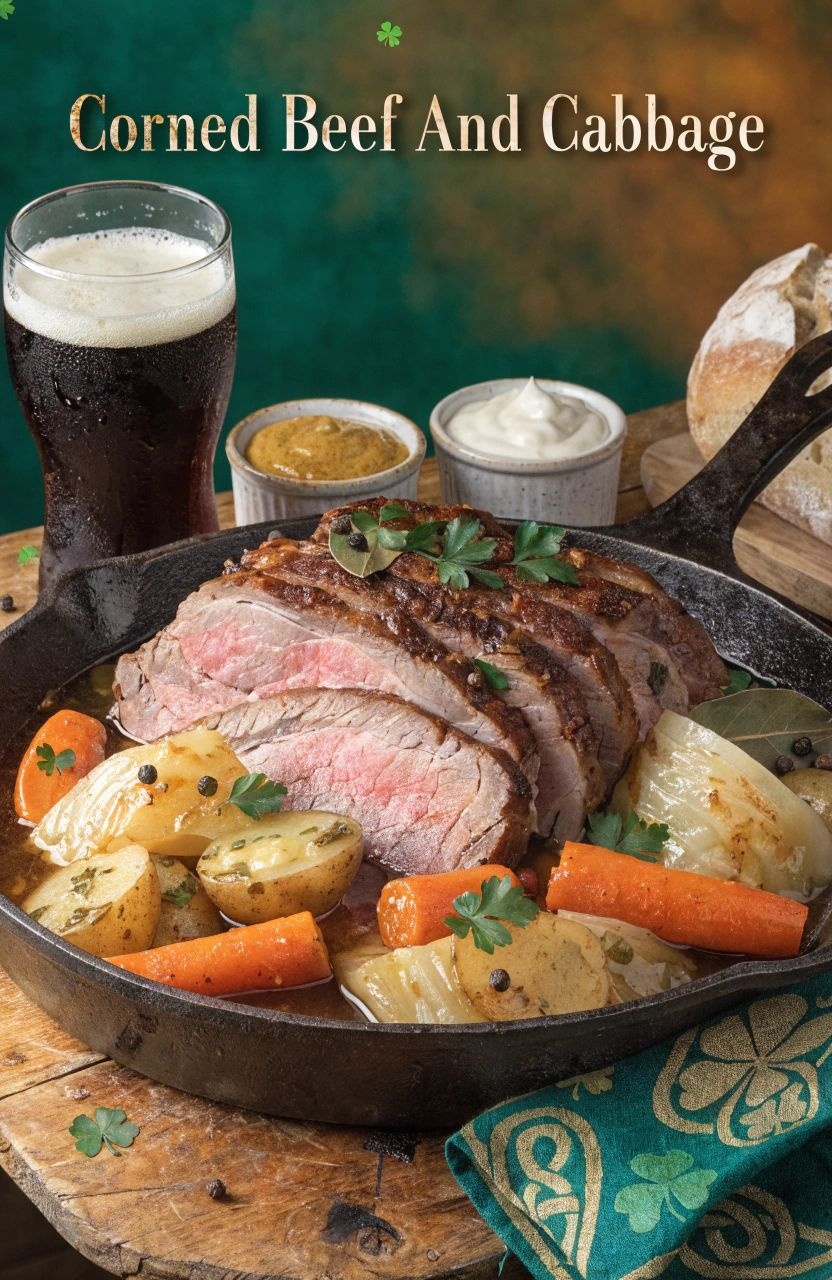
Some dishes don’t just feed you — they carry something with them. A memory locked inside a smell, a feeling that surfaces the moment the lid comes off the pot and that particular steam rises into the kitchen air. For millions of people, corned beef and cabbage is exactly that kind of dish. Maybe it’s the one your grandmother made every March without fail, the kitchen fogged with warmth while the rest of the house smelled like brine and bay leaves and something deeply right. Maybe you’ve only had it once — at a crowded St. Patrick’s Day table surrounded by people you loved — and you’ve been quietly chasing that exact feeling ever since.
Whatever your history with it, this guide gives you everything you need to make corned beef and cabbage the right way. From choosing your cut to mastering the cooking method, from understanding the spice packet to knowing exactly when the meat is ready — this is the only reference you’ll need.
Before you fire up the stove, it’s worth knowing where this dish actually comes from — because the answer might surprise you.
Corned beef and cabbage is not, strictly speaking, a dish from Ireland. It’s an Irish-American creation, born out of necessity and adaptation in the immigrant communities of 19th century New York. Traditional Irish cooking centered on salted pork and bacon — beef was expensive and largely inaccessible to working-class families. When Irish immigrants arrived in America and settled in cities like New York, they found an unexpected solution through their neighbors: Jewish kosher butchers on the Lower East Side who sold corned beef at prices that working families could actually afford.
Cabbage completed the picture — cheap, widely available, and a natural companion to the brined, salty meat. The dish that emerged wasn’t authentically Irish, but it was authentically Irish-American — a symbol of resilience, community, and adaptation that has carried cultural weight ever since.
Walk into any grocery store in March and you’ll face a choice between two cuts of corned beef brisket. Understanding the difference saves you from disappointment at the table.
| Cut Type | Fat Content | Texture | Best For | Price |
|---|---|---|---|---|
| Flat cut | Leaner | Uniform, slices cleanly | Plated dinner presentation | Moderate |
| Point cut | Higher fat | Juicier, more tender | Shredding, sandwiches, hash | Lower |
| Whole packer | Both sections | Maximum flavor and yield | Large gatherings | Varies |
For a traditional corned beef and cabbage dinner where you want clean, attractive slices on the plate, the flat cut is your best choice. If you’re planning to shred the meat for sandwiches or repurpose the leftovers into hash the next morning, the point cut delivers more moisture and flavor per dollar.
| Ingredient | Amount | Notes |
|---|---|---|
| Corned beef brisket | 3–4 lbs | With spice packet included |
| Green cabbage | 1 large head | Cut into wedges |
| Large carrots | 4 | Peeled, cut into 2-inch pieces |
| Yellow potatoes | 1.5 lbs | Halved or quartered |
| Yellow onion | 1 large | Quartered |
| Garlic cloves | 4 | Smashed |
| Low-sodium beef broth | 4 cups | Base of braising liquid |
| Bay leaves | 2 | Adds depth and earthiness |
| Black peppercorns | 1 tsp | Part of the spice profile |
| Fresh parsley | ¼ cup | For garnish |
| Dijon mustard | For serving | Classic pairing |
| Horseradish sauce | For serving | Traditional accompaniment |
That small packet tucked inside your corned beef packaging does more work than it gets credit for. Here’s what’s typically inside and why each element matters:
| Spice | Flavor Role |
|---|---|
| Mustard seeds | Sharp, tangy warmth |
| Bay leaves | Earthy, herbal depth |
| Black peppercorns | Subtle heat and structure |
| Allspice berries | Warm, slightly sweet complexity |
| Coriander seeds | Citrusy, floral brightness |
| Cloves | Deep, aromatic warmth |
Use the included packet as your base — then build on it. Adding fresh thyme, smashed garlic, and a quartered onion to the braising liquid takes the flavor from standard to genuinely memorable.
This is the method that started it all, and it remains the most reliable path to deeply flavored, properly tender corned beef and cabbage. The trade-off is time — but that time is almost entirely hands-off.
If you want to walk away and return to a kitchen that smells like the best decision you’ve made all week, the slow cooker is your answer. Low and slow produces exceptionally tender results with almost zero active effort.
| Step | Timing | Details |
|---|---|---|
| Add beef, aromatics, broth | Hour 0 | Fat side up, spice packet included |
| Add potatoes and carrots | Hour 6 on low / Hour 3 on high | Nestle around beef in liquid |
| Add cabbage wedges | Final 1–1.5 hours | Prevents mushiness |
| Rest and slice | After cooking | 10–15 min rest under foil |
The single biggest mistake people make with slow cooker corned beef and cabbage is adding the cabbage at the beginning. Eight hours in a slow cooker turns cabbage into something unrecognizable. Add it in the final stretch and it comes out tender but still structured — exactly right.
When you want the full flavor of a slow-braised dish in a fraction of the time, the Instant Pot delivers results that genuinely rival the traditional stovetop method.
A few small adjustments make a significant difference in your final result:
| Common Mistake | Why It Matters | The Fix |
|---|---|---|
| Skipping the rinse | Creates an overly salty dish | Rinse under cold water before cooking |
| Boiling too aggressively | Produces tough, stringy meat | Maintain a gentle simmer throughout |
| Slicing with the grain | Makes every bite chewy | Always cut perpendicular to muscle fibers |
| Adding cabbage too early | Results in mushy, flavorless cabbage | Add only in the final 20–25 minutes |
| Skipping the rest | Juices run out immediately when sliced | Rest 10–15 minutes under foil |
Flavor upgrades worth trying:
The dish is complete on its own — but the right accompaniments make it a full celebration:
| Condiment | Why It Works |
|---|---|
| Dijon mustard | Classic, sharp, essential |
| Whole grain mustard | Textured and complex against rich beef |
| Creamy horseradish | Cuts through the fat beautifully |
| Honey mustard | A milder option for varied palates |
| Brown butter sauce | Drizzled over cabbage wedges — underrated |
Here is an honest truth: the leftovers from corned beef and cabbage are often better than the original meal. The flavors settle and deepen overnight in a way that rewards patience.
| Leftover Recipe | Prep Time | Key Ingredients |
|---|---|---|
| Corned beef hash | 20 minutes | Potatoes, onion, butter |
| Reuben sandwich | 10 minutes | Rye bread, Swiss cheese, sauerkraut |
| Corned beef soup | 30 minutes | Braising liquid, barley, vegetables |
| Corned beef tacos | 15 minutes | Tortillas, slaw, horseradish crema |
| Corned beef fried rice | 20 minutes | Day-old rice, egg, soy sauce |
On the stovetop, corned beef and cabbage takes 2.5 to 3.5 hours depending on brisket size, at a consistent gentle simmer. The slow cooker requires 8–10 hours on low or 4–5 hours on high. The Instant Pot shortens the process to roughly 90 minutes total, making it the fastest route to a fully tender result.
Yes — always. Rinsing under cold water removes excess surface brine that would otherwise make your finished dish far too salty. You’re not washing away the curing flavor embedded deep in the meat — that stays completely intact. You’re only removing the surface salt that has no business in your braising liquid.
The flat cut is the standard recommendation for a traditional plated dinner because it slices cleanly and presents well. The point cut has more marbling, making it juicier and more forgiving for those who prefer to shred the meat or use it in sandwiches and hash the following day.
Yes — and it genuinely improves overnight. Cook the brisket, cool it in its braising liquid, and refrigerate. The next day, skim any solidified fat from the surface, reheat gently on the stovetop, and add fresh cabbage and vegetables during reheating. The flavor will be noticeably deeper.
Despite the association, corned beef and cabbage did not originate in Ireland. It was developed by Irish immigrants in 19th century America who adapted their traditional recipes around the affordable ingredients available to them — particularly corned beef sourced from Jewish butchers in cities like New York. The dish became a symbol of Irish-American identity and has been linked to St. Patrick’s Day celebrations ever since.
Insert a fork into the thickest part of the brisket and twist gently. If the meat yields without resistance and begins to pull apart slightly, it’s ready. An internal temperature of 160–165°F confirms it’s fully cooked. If it still feels firm or resistant to the fork, it needs more time — no shortcuts here.
Every time you make corned beef and cabbage, you’re doing something more than putting dinner on the table. You’re participating in a tradition that crossed an ocean, survived hardship, and found its way into kitchens across generations — not because it’s complicated or impressive, but because it’s deeply, reliably good.
Choose your method. Take your time. Rinse the brisket, keep the simmer gentle, add the cabbage last, and let the meat rest before you slice it. Do those things and the dish will take care of the rest.